
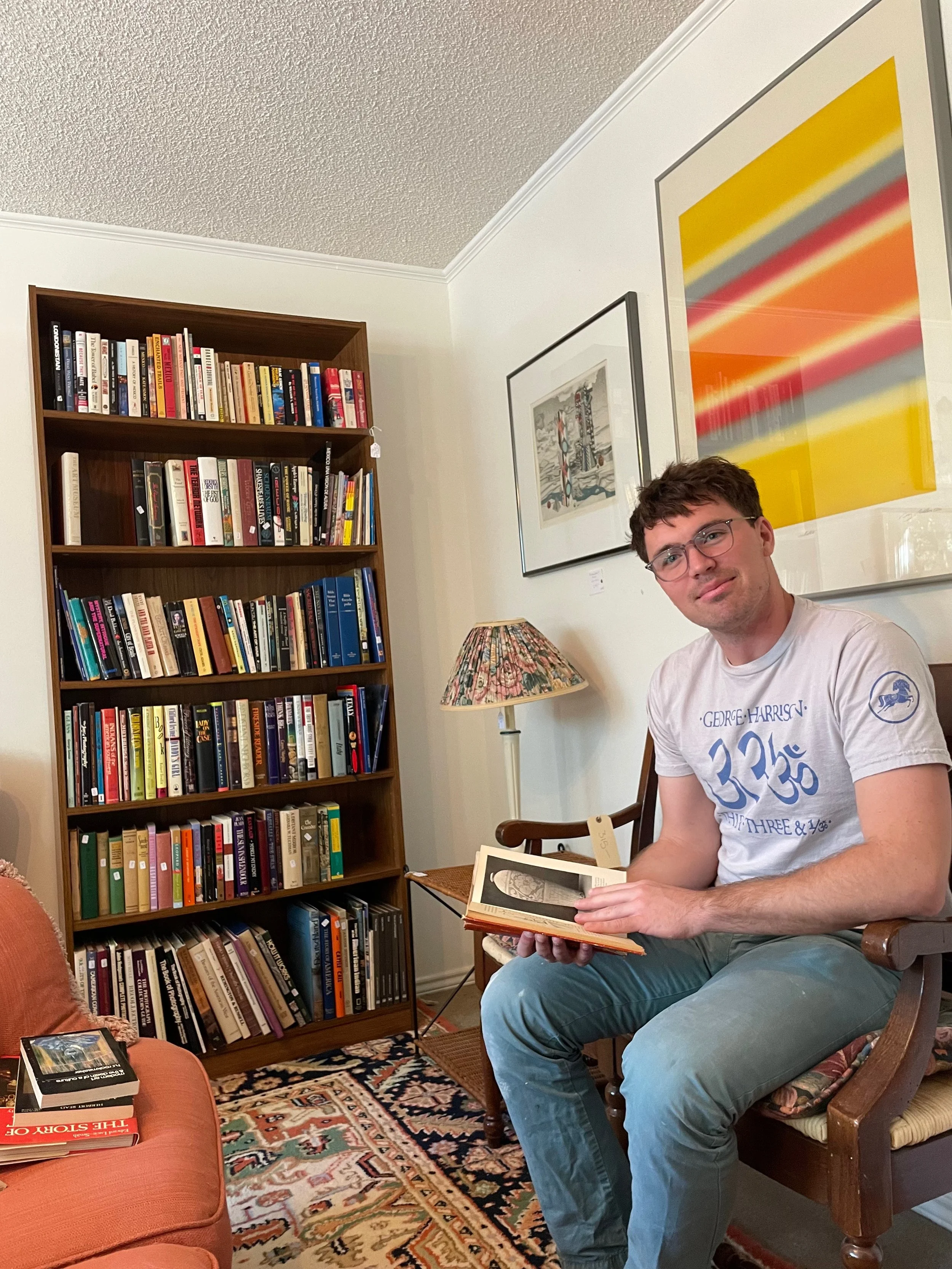
About Hunter Marze
I make atmospheric-fired functional pottery influenced by folk pottery traditions, my work is also inspired by reflections made while out in nature. I also makes insectile sculpture that disrupts gallery spaces allowing viewers to reconsider their relation to others, objects, and the natural world.
My journey in ceramics began in 2015 in Waco, TX, where I made pottery for a pottery production studio with my brother for 5+ years before attending the University of North Texas for my Bachelor of Fine Arts. I am currently an MFA candidate at Texas Tech in Lubbock, TX and am set to graduate in the Spring of 2026. I have exhibited my work across the country and in Mexico, and have had several solo exhibitions. Beyond my studio practice, I enjoy teaching students new techniques, tennis, nature trails, and making puns.
Artist Statement
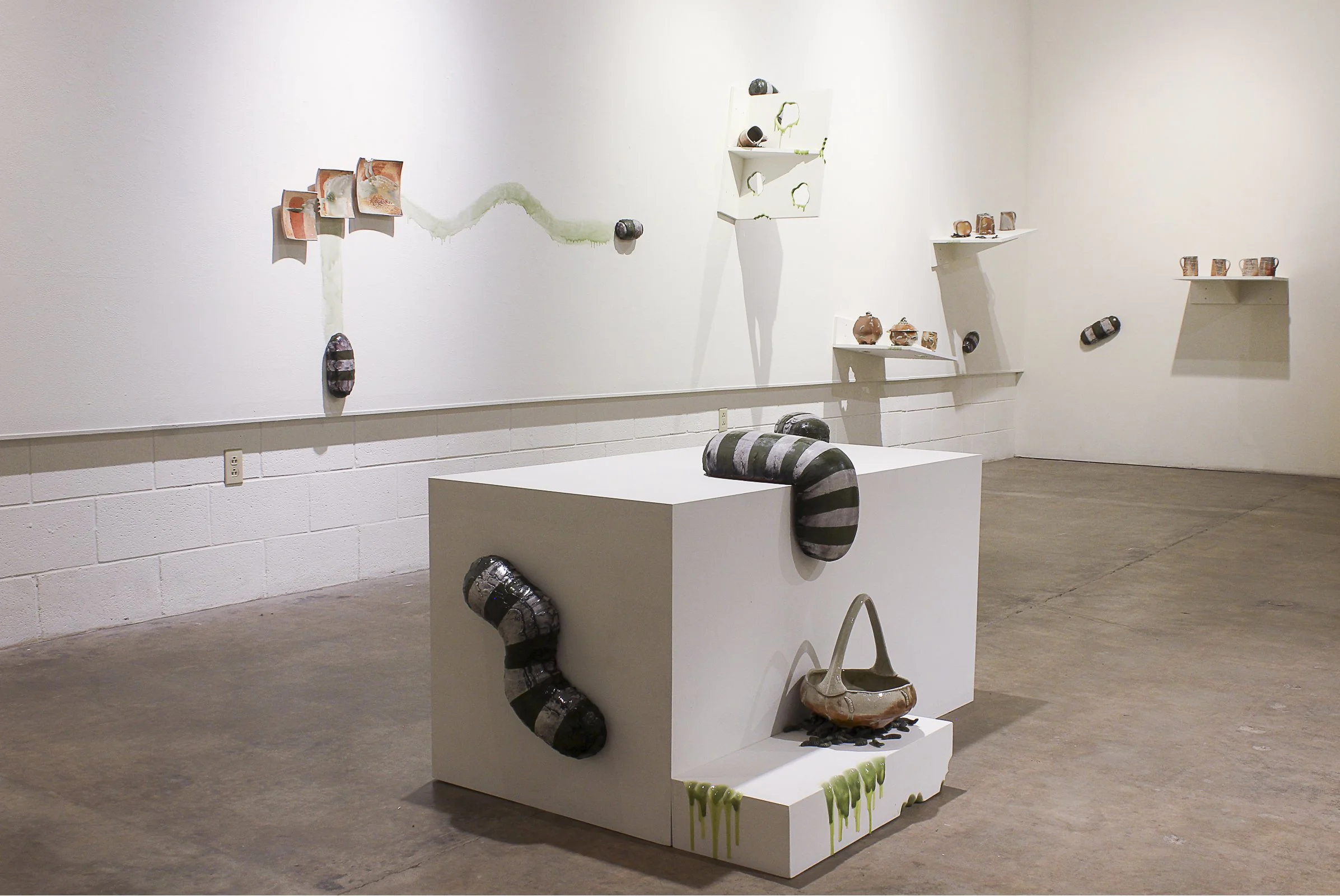
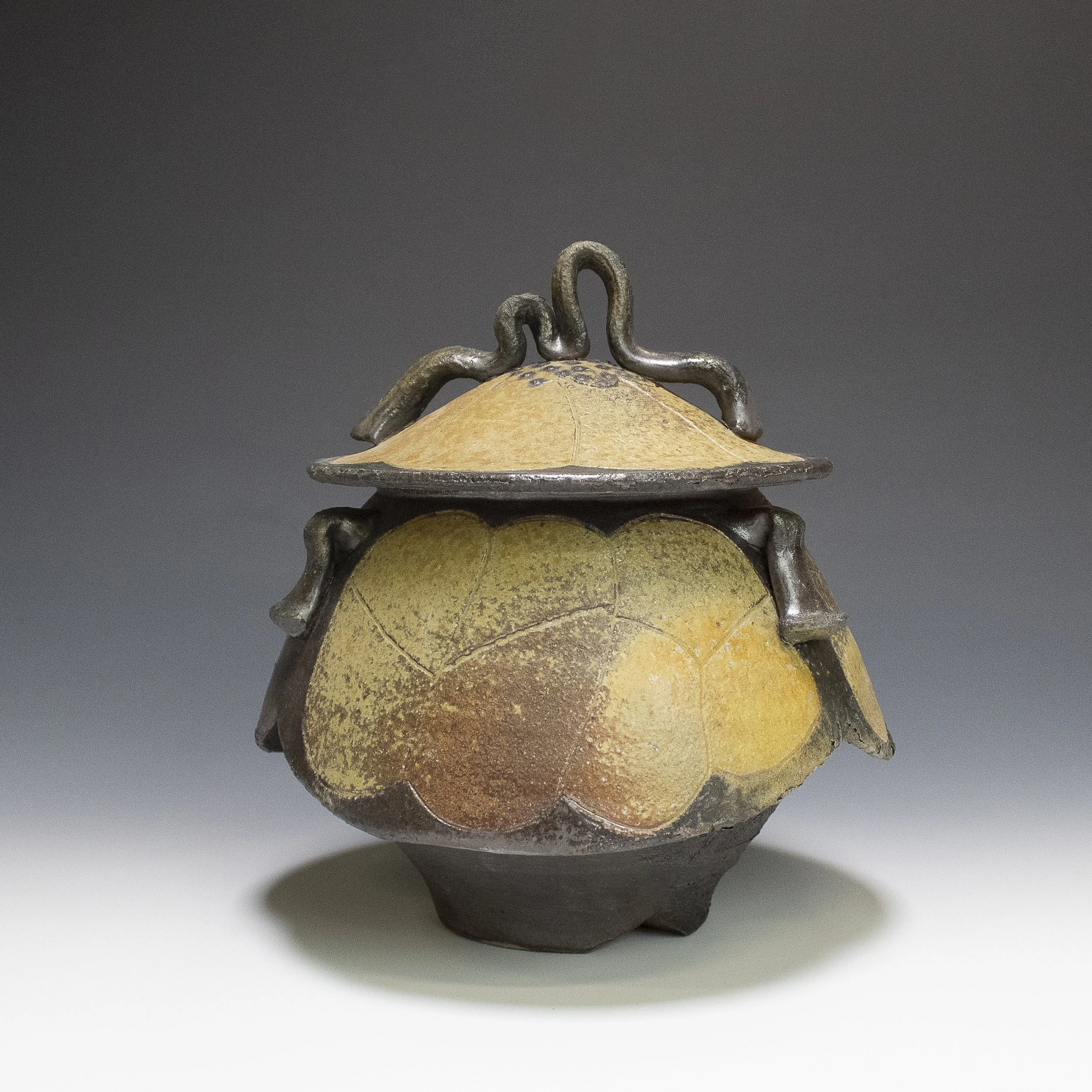
I am an atmospheric firing potter working primarily with wood, soda, and salt kilns. My work draws from an appreciation for the aesthetic language of folk pottery traditions, as well as from observations of the natural world. Encounters with remnants left by insects; chewed leaves, dirt dauber nests adhered to walls prompt reflections on control, containment, and the shifting hierarchies between craft, art, and nature. My practice exists at the intersection of these influences.
Insects embody a tension I am deeply drawn to: they are regarded as both grotesque and beautiful, marginal yet foundational to ecological systems. I see a similar sublime tension in the moments when life disrupts our expectations, when circumstances humble us and force a reckoning between how we imagined life would unfold and how it has become. Vessels, as objects meant for containment serve as a fitting site for this conceptual framework where there is a lapse in control. This friction between intention and inevitability underpins both my conceptual and material approach.
Formally, I utilize the materials and vocabulary of the Leach tradition, iron-rich clay bodies, ash glazes, wheel-thrown functional forms, but allow them to speak in the language of insects. Ash glaze drips become trails marking imagined movement across the surface. Curvilinear handles, often articulated with dark glaze, evoke the segmented delicacy of insect legs.
Through atmospheric process and surface intervention, I explore the vessel and the gallery as sites of the grotesque, disrupted containment, where tradition and control meets intrusion, and where what is considered grotesque reveals its necessity and quiet beauty.